How to Charge a Portable Power Station with Solar Panels: Complete Guide
Complete guide to charging portable power stations with solar panels. Learn setup, optimization, troubleshooting, and best practices for solar power.
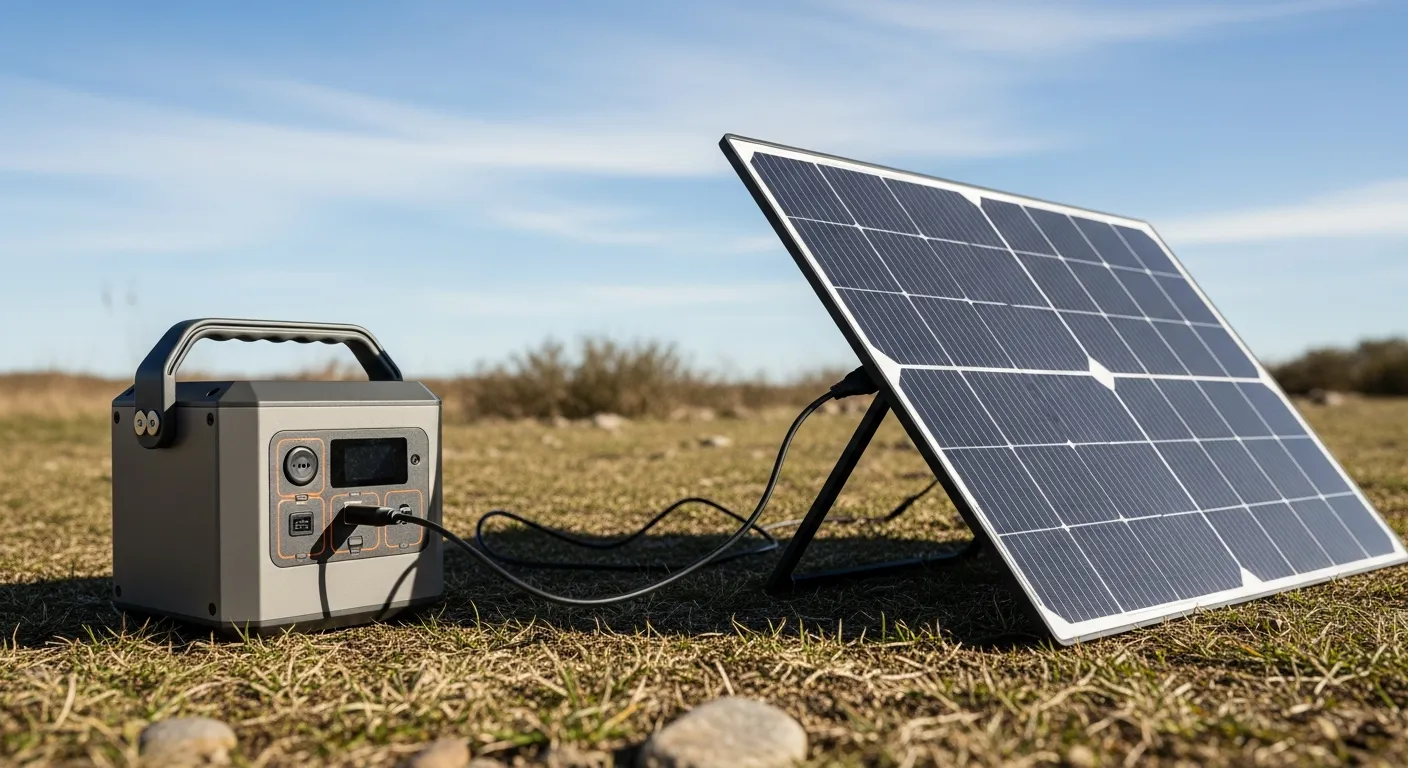
How to Charge a Portable Power Station with Solar Panels: Complete Guide
Solar charging transforms your portable power station from a limited-capacity device into an unlimited power source. Whether you're camping off-grid, preparing for emergencies, or seeking energy independence, solar panels can keep your power station topped up indefinitely.
This comprehensive guide covers everything you need to know about solar charging portable power stations - from basic concepts to advanced optimization techniques.
Solar Charging Benefits
- Unlimited runtime: Never run out of power with adequate sunlight
- Energy independence: No reliance on grid power or fuel
- Silent operation: No noise like gas generators
- Zero emissions: Completely clean energy source
- Long-term savings: Free fuel from the sun
How Solar Charging Works
Understanding the basic principles helps you make better decisions about equipment and setup:
The Solar Charging Process:
- Solar panels convert sunlight into DC electricity
- MPPT charge controller (built into power station) optimizes power transfer
- Battery management system safely charges the internal batteries
- Power station stores energy for later use
Key Components:
- Solar Panels: Convert light to electricity (measured in watts)
- MPPT Controller: Maximizes power harvest from panels
- MC4 Connectors: Standard weatherproof connections
- Cables: Carry power from panels to station
Types of Solar Panels
Monocrystalline Panels
Pros:
- Highest efficiency (20-22%)
- Best performance in low light
- Compact size for given power output
- Longest lifespan (25+ years)
Cons:
- Most expensive option
- Performance drops in high heat
Best for: Permanent installations, limited space, maximum efficiency needs
Polycrystalline Panels
Pros:
- Good efficiency (15-17%)
- Lower cost than monocrystalline
- Better heat tolerance
- Widely available
Cons:
- Lower efficiency means larger panels
- Reduced low-light performance
Best for: Budget-conscious users, areas with ample space
Flexible/Portable Panels
Pros:
- Lightweight and packable
- Can conform to curved surfaces
- Easy to transport and store
- Quick setup
Cons:
- Lower efficiency (12-15%)
- Shorter lifespan
- Higher cost per watt
- More fragile
Best for: Camping, RV travel, temporary installations
Matching Panels to Your Power Station
Proper matching ensures optimal charging performance and prevents damage:
Check Your Power Station Specifications:
- Maximum solar input (watts): Don't exceed this limit
- Input voltage range: Panels must operate within this range
- Connector type: Usually MC4, XT60, or proprietary
- MPPT voltage window: For maximum efficiency
Popular Power Station Solar Specs:
| Brand/Model | Max Solar Input | Input Voltage | Connector |
|---|---|---|---|
| Jackery Explorer Series | 100-800W | 12-30V | DC8020 |
| EcoFlow DELTA Series | 400-1600W | 11-100V | MC4/XT60 |
| Bluetti AC Series | 200-1200W | 12-60V | MC4 |
| Goal Zero Yeti Series | 60-600W | 14-50V | 8mm/HPP |
| Anker SOLIX Series | 200-1000W | 11-60V | MC4/XT60 |
Series vs Parallel Panel Configurations
Series Connection
How it works: Panels connected positive to negative, voltage adds up
Example: Two 100W, 20V panels in series = 200W, 40V total
Advantages:
- Higher voltage improves MPPT efficiency
- Thinner cables can carry same power
- Better performance in partial shade
- Simpler wiring with fewer connections
Disadvantages:
- Can exceed power station voltage limits
- Entire string affected by single panel shading
- More dangerous high voltages
Best for: Unshaded installations, long cable runs, high-power systems
Parallel Connection
How it works: Panels connected positive to positive, current adds up
Example: Two 100W, 20V panels in parallel = 200W, 20V total
Advantages:
- Voltage stays low and safe
- Shading one panel doesn't affect others
- Easy to add or remove panels
- More forgiving system design
Disadvantages:
- Requires thicker cables for high current
- More complex wiring with MC4 combiners
- Lower MPPT efficiency at low voltages
Best for: Situations with partial shading, modular systems, safety-conscious users
MPPT vs PWM Charge Controllers
Understanding charge controllers helps you optimize your solar setup:
MPPT (Maximum Power Point Tracking)
How it works: Continuously adjusts to find optimal operating point
Advantages:
- 20-30% more efficient than PWM
- Works with higher voltage panels
- Better performance in cloudy conditions
- Can handle mismatched panels
Found in: Most modern portable power stations
PWM (Pulse Width Modulation)
How it works: Simple on/off switching to regulate voltage
Advantages:
- Lower cost
- Simpler design
- Very reliable
Disadvantages:
- Limited to low-voltage panels (18V typical)
- Less efficient power conversion
- Poor performance with voltage mismatch
Found in: Older or budget power stations
Optimal Solar Panel Placement
Sun Angle and Direction
Optimal angles by season (Northern Hemisphere):
- Spring/Fall: Equal to your latitude (37° for most US)
- Summer: Latitude minus 15° (22° for most US)
- Winter: Latitude plus 15° (52° for most US)
Direction:
- Fixed installations: Face true south for maximum daily production
- Portable setups: Track the sun for maximum instantaneous power
Shading Considerations
Even small amounts of shading can dramatically reduce output:
- Partial shading: Can reduce total array output by 50%+
- Moving shadows: Trees, buildings, clouds all affect performance
- Panel design matters: Bypass diodes minimize shading impact
Environmental Factors
- Temperature: Panels lose 0.4% efficiency per degree above 77°F
- Altitude: Higher elevation increases output (less atmospheric filtering)
- Weather: Cloudy conditions reduce output to 10-50% of clear sky
- Dust/dirt: Can reduce output 5-15% depending on accumulation
Solar Charging Times
Realistic charging expectations help with planning:
Factors Affecting Charging Speed:
- Panel wattage: Higher watts = faster charging
- Sun intensity: Peak sun hours vary by location and season
- Weather conditions: Clouds, haze, rain all reduce output
- Panel efficiency: Quality panels harvest more energy
- System losses: Cables, connectors, controller efficiency
Real-World Charging Examples:
400W panels in good sunlight:
- Jackery Explorer 1000 (1002Wh): 3-4 hours
- EcoFlow DELTA 2 (1024Wh): 3-4 hours
- Bluetti AC200 (2000Wh): 6-7 hours
200W panels in good sunlight:
- Jackery Explorer 500 (518Wh): 3-4 hours
- EcoFlow River 2 (256Wh): 2-3 hours
- Goal Zero Yeti 400 (396Wh): 3-4 hours
Note: Times assume optimal conditions. Add 25-50% for real-world conditions.
Cloudy Weather Performance
Understanding performance in less-than-perfect conditions:
Cloud Cover Impact:
- Light clouds: 60-80% of clear sky output
- Heavy overcast: 20-40% of clear sky output
- Stormy conditions: 5-15% of clear sky output
Maximizing Cloudy Day Performance:
- Use more panels: Oversizing helps capture available light
- High-efficiency panels: Better low-light performance
- Optimal positioning: Track bright spots in clouds
- Clean panels: Remove dust, leaves, snow
- MPPT controllers: Better at harvesting limited power
Best Solar Panels by Power Station Brand
Jackery Solar Panels
SolarSaga Series:
- SolarSaga 100W: Perfect for Explorer 500/1000 series
- SolarSaga 200W: Ideal for Explorer 2000+ series
- Pros: Perfect compatibility, quality construction, foldable design
- Cons: Premium pricing, limited to Jackery stations
EcoFlow Solar Panels
Portable Series:
- 110W Portable: Great for River series
- 220W Bifacial: Excellent for DELTA series
- 400W Portable: Professional setup for large stations
- Pros: High efficiency, weather resistant, easy setup
- Cons: Expensive, bulky when folded
Bluetti Solar Panels
SP Series:
- SP200: Versatile 200W monocrystalline
- SP350: High-power option for AC300/500
- Pros: Good value, reliable performance, MC4 compatibility
- Cons: Heavier than competitors, basic features
Goal Zero Solar Panels
Boulder and Nomad Series:
- Nomad 100: Portable folding design
- Boulder 200: Rigid panel for permanent setup
- Pros: Extremely durable, modular system, proven reliability
- Cons: Lower efficiency, high cost per watt
Third-Party Options
Renogy, AIMS, Rich Solar:
- Pros: Lower cost, widely available, standard connections
- Cons: May require adapter cables, varying quality
Common Mistakes and How to Avoid Them
Mistake 1: Exceeding Input Limits
Problem: Connecting too many panels can damage your power station
Solution: Always check maximum input watts and voltage before connecting
Mistake 2: Wrong Connector Types
Problem: Incompatible connectors prevent charging
Solution: Verify connector types or buy proper adapters
Mistake 3: Poor Panel Placement
Problem: Shading and wrong angles drastically reduce output
Solution: Monitor panel output and adjust position throughout the day
Mistake 4: Ignoring Cable Losses
Problem: Long, thin cables waste significant power
Solution: Use shortest possible cables with adequate thickness (12-14 AWG recommended)
Mistake 5: Not Monitoring Performance
Problem: Hidden issues reduce charging effectiveness
Solution: Check input watts on power station display regularly
Advanced Solar Charging Tips
Panel Angle Adjustment
- Morning: Tilt east to catch early sun
- Midday: Position for maximum solar angle
- Afternoon: Adjust west for late-day harvesting
- Tracking: Can increase daily output 20-35%
Multiple Panel Arrays
For maximum power:
- Mix orientations: East/west panels extend harvest time
- Stagger positions: Avoid mutual shading
- Use bypass diodes: Minimize shading impact
Seasonal Optimizations
Summer:
- Lower panel angles for high sun
- Provide ventilation to prevent overheating
- Clean frequently due to dust/pollen
Winter:
- Steeper angles for low sun
- Keep snow cleared for maximum output
- Account for shorter day lengths
Safety Considerations
Electrical Safety
- High voltage warning: Series panels can produce dangerous voltages
- Proper connections: Ensure all connections are secure and weatherproof
- Ground fault protection: Use GFCI protection for large arrays
- Fire prevention: Keep panels away from flammable materials
Physical Safety
- Secure mounting: Prevent panels from being blown by wind
- Trip hazards: Route cables safely to avoid tripping
- UV protection: Protect exposed cables from UV degradation
- Wildlife: Protect connections from rodents and birds
Troubleshooting Common Issues
No Charging/Low Charging
Check these first:
- Panel connections: Ensure all connections are tight
- Shading: Even small shadows can stop charging
- Panel orientation: Adjust for optimal sun angle
- Power station settings: Ensure solar input is enabled
- Cable damage: Inspect for cuts or corrosion
Intermittent Charging
Possible causes:
- Loose connections: Check all MC4 and terminal connections
- Moving shadows: Trees, clouds, or structures blocking sun
- Overheating: Panels or power station getting too hot
- Voltage mismatch: Panels operating outside MPPT window
Reduced Performance Over Time
Normal degradation:
- Solar panels lose 0.5-0.8% efficiency per year
- After 20 years, expect 80-85% of original output
- Power station batteries also degrade over time
Maintenance issues:
- Dirty panels can lose 15%+ efficiency
- Corroded connections increase resistance
- Damaged cells create hot spots and reduced output
Cost-Benefit Analysis
Initial Investment
Panel costs (2026 pricing):
- 100W portable: 50-300
- 200W portable: 50-450
- 400W array: 00-700
- 800W system: 00-1200
Payback Period
Compared to grid charging:
- At sh.15/kWh electricity rate
- 400W system generating 1.5kWh/day
- Annual savings: ~0
- Payback period: 6-8 years
Compared to generator fuel:
- Generator fuel cost: sh.30-0.50/kWh
- Same 400W system
- Annual savings: 50-250
- Payback period: 2-4 years
Long-term Value
- Energy independence: Priceless during outages
- Environmental benefits: Zero emissions operation
- Convenience: Silent, automatic operation
- Reliability: No fuel shortages or engine maintenance
Future-Proofing Your Solar Setup
Expandability Planning
- Oversize your charge controller capacity: Allow for adding more panels
- Choose modular systems: Easy to add batteries or panels later
- Standard connections: MC4 and Anderson connectors ensure compatibility
Technology Trends
- Panel efficiency: Improving 1-2% per year
- Bifacial panels: Capture light from both sides
- Flexible panels: Better efficiency and durability
- Smart inverters: Better integration with power stations
Frequently Asked Questions
Can I charge my power station with any solar panel?
Not exactly. Panels must match your power station's voltage and power input specifications. Most modern stations accept 12-60V input, but always check your manual first.
How fast will solar panels charge my power station?
In ideal conditions, 400W of panels can charge a 1000Wh station in 3-4 hours. Real-world conditions (clouds, angle, temperature) typically add 25-50% to charging times.
Do solar panels work on cloudy days?
Yes, but at reduced capacity. Light clouds might provide 60-80% of clear-sky output, while heavy overcast conditions may only provide 20-40%.
Can I leave solar panels connected all the time?
Yes, modern power stations have built-in charge controllers that prevent overcharging. The panels will simply stop producing power when the battery is full.
What happens if I connect too many solar panels?
Exceeding the maximum input wattage or voltage can damage your power station's charge controller. Always check specifications before connecting additional panels.
Are expensive solar panels worth it?
High-efficiency panels are worth it if you have limited space or need maximum portable power. For permanent installations with adequate space, mid-range panels offer better value.
Recommended Solar Panel Setups
For Small Power Stations (300-500Wh):
- Single 100-200W portable panel
- Foldable design for easy transport
- Budget: 00-400 total
For Medium Power Stations (500-1500Wh):
- 200-400W of panels (1-2 panels)
- Mix of portable and rigid options
- Budget: 00-700 total
For Large Power Stations (1500Wh+):
- 400-800W+ of panels
- Multiple panels in series or parallel
- Consider fixed installation for base camps
- Budget: 00-1200+ total
Conclusion
Solar charging transforms portable power stations from limited-capacity backup devices into unlimited energy sources. With proper planning and setup, you can achieve energy independence for camping, emergencies, or daily off-grid living.
The key to successful solar charging is matching your panels to your power station's specifications, understanding the factors that affect performance, and optimizing your setup for your specific conditions and needs.
Start with a modest solar setup and expand as you gain experience. A 200-400W panel array will meet most users' needs and provide excellent value for the investment. Remember that solar technology continues improving, so there's no perfect time to wait - the best time to start harvesting free energy from the sun is now.
Whether you're powering a weekend camping trip or preparing for extended outages, solar charging provides clean, quiet, renewable power that will serve you for decades to come.
Put Solar Power to Work
Solar charging is especially powerful for RV and van life and camping trips. Not sure how much solar you need? Start with our appliance power guide to calculate your daily usage, then size your panels accordingly.