How Long Does a Portable Power Station Last? Lifespan, Runtime & Battery Guide
How long does a portable power station last? Complete guide to runtime per charge and battery lifespan. LFP vs NMC cycles, real-world runtimes, and tips to maximize longevity.
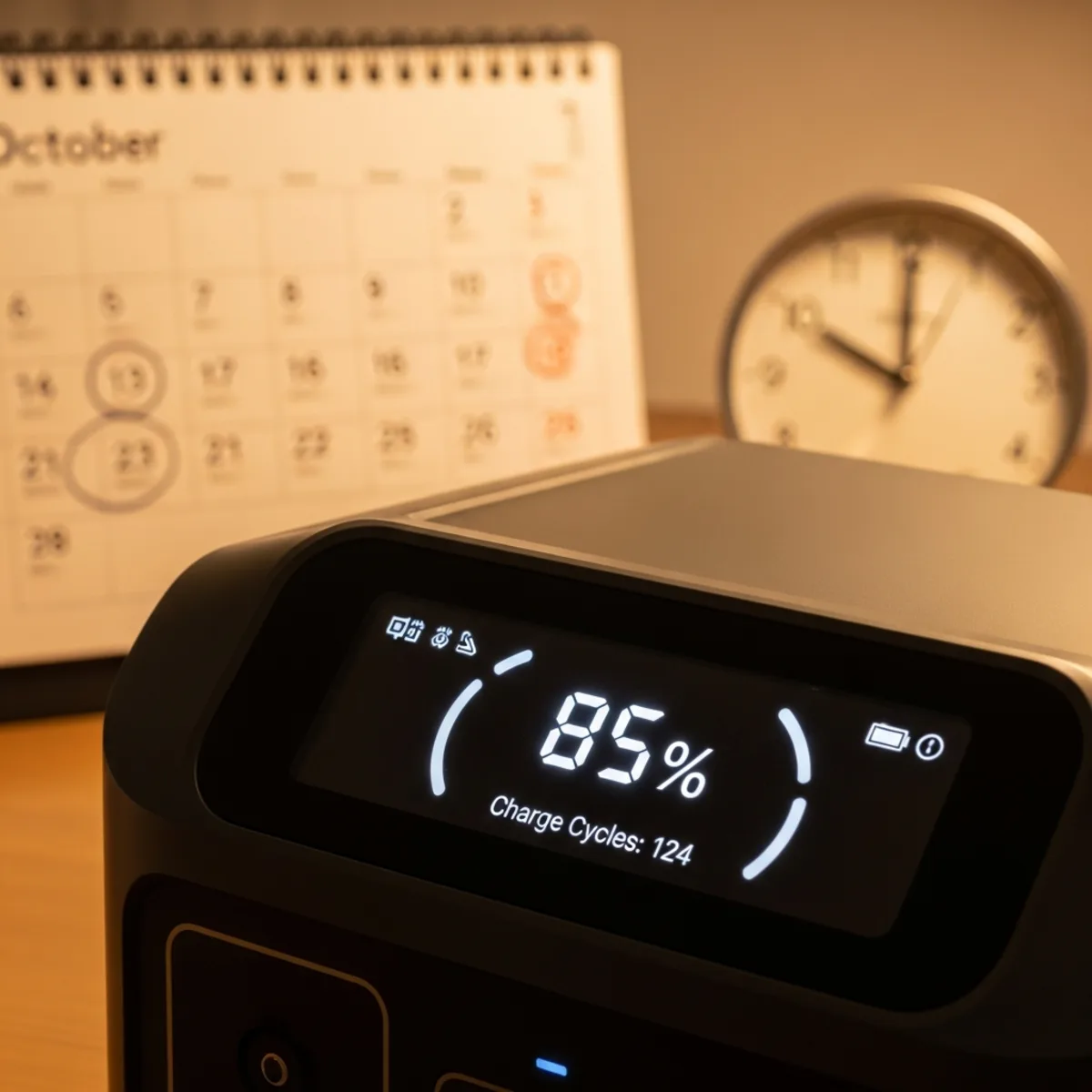
Two Types of "Lasting": Runtime vs Lifespan
When people ask "how long does a portable power station last?" they're usually asking one of two things:
- Runtime: How many hours will it power my devices on a single charge?
- Lifespan: How many years will the unit last before the battery degrades?
Both matter, and both depend on different factors. Let's break each one down so you know exactly what to expect from your investment.
Part 1: Runtime — How Long Per Charge?
The Simple Formula
Runtime comes down to basic math: capacity (Wh) ÷ device wattage = hours of runtime. A 1000Wh power station running a 100W device lasts roughly 10 hours. But real-world numbers are always lower than the math suggests — here's why.
Why Actual Runtime Is 85-90% of Calculated
Every power station loses some energy to heat and the DC-to-AC conversion process (inverter efficiency). Most quality units operate at 85-90% efficiency. So that 1000Wh station realistically delivers about 850-900Wh of usable power.
Other factors that reduce runtime:
- Temperature: Cold weather (below 32°F/0°C) can reduce capacity by 10-20%
- Inverter overhead: The inverter draws a small amount even with no load
- Age: Batteries lose capacity over time (more on this in Part 2)
- Simultaneous devices: Running multiple devices is less efficient than one at a time
Real-World Runtime Examples
| Device (Wattage) | 500Wh Station | 1000Wh Station | 2000Wh Station |
|---|---|---|---|
| Smartphone charge (15W) | ~28 charges | ~57 charges | ~113 charges |
| Laptop (65W) | ~6.5 hours | ~13 hours | ~26 hours |
| Wi-Fi router (15W) | ~28 hours | ~57 hours | ~113 hours |
| Mini fridge (50W avg) | ~8.5 hours | ~17 hours | ~34 hours |
| Full-size fridge (80W avg) | ~5 hours | ~10.5 hours | ~21 hours |
| CPAP machine (30-60W) | ~7-14 hours | ~14-28 hours | ~28-57 hours |
| TV 50" LED (100W) | ~4 hours | ~8.5 hours | ~17 hours |
| Electric blanket (200W) | ~2 hours | ~4 hours | ~8.5 hours |
| Microwave (700W) | ~36 min | ~73 min | ~2.4 hours |
| Hair dryer (1500W) | N/A | ~34 min | ~68 min |
For a deeper dive on what you can run, see our complete appliance power guide. Need help sizing? Try our power station sizing calculator.
Tips to Maximize Runtime
- Turn off the inverter when only charging USB devices — DC-to-DC is more efficient
- Use eco mode if your station has one — it turns off the inverter during idle periods
- Prioritize essentials: Fridge, communication devices, and lights first
- Keep it warm: In winter, store your power station indoors at room temperature
- Avoid phantom loads: Unplug devices when not actively charging
Part 2: Battery Lifespan — How Many Years?
LFP vs NMC: The Battery Chemistry That Matters Most
The single biggest factor in how long your power station lasts is its battery chemistry:
| Feature | LiFePO4 (LFP) | NMC (Lithium-ion) |
|---|---|---|
| Cycle life | 2,500-3,500+ cycles | 500-800 cycles |
| Expected lifespan | 8-15 years | 3-5 years |
| Capacity at end of life | 80% of original | 80% of original |
| Thermal stability | Excellent | Moderate |
| Weight | Heavier | Lighter |
| Cost | Slightly higher | Lower |
In 2026, there's no reason to buy an NMC power station unless weight is your absolute top priority. LFP batteries last 3-5x longer, are safer, and the price gap has nearly disappeared. Every major brand (EcoFlow, Bluetti, Jackery, Anker) has shifted to LFP for their flagship models.
What Is a "Cycle"?
One cycle = draining from 100% to 0% and charging back to 100%. But you don't have to do it all at once. Using 50% and recharging counts as half a cycle. Using 25% four times equals one cycle.
A power station rated for 3,000 cycles to 80% capacity means:
- Daily use: 3,000 days ≈ 8+ years before dropping to 80% capacity
- Weekly use: 3,000 weeks ≈ 57+ years (you'll replace it for other reasons first)
- Emergency only (monthly): Essentially lifetime
Even at 80% capacity, the unit is still perfectly usable — a 2000Wh station becomes a 1600Wh station. That's still more than enough for most use cases.
Real-World Lifespan by Use Case
| Use Case | Cycles/Year (approx) | LFP Lifespan | NMC Lifespan |
|---|---|---|---|
| Daily off-grid living | 365 | 7-10 years | 1.5-2 years |
| Weekend camping | 100 | 25-35 years | 5-8 years |
| Emergency backup only | 12-24 | 100+ years | 20-65 years |
| RV/van life (seasonal) | 150-200 | 12-23 years | 2.5-5 years |
| Work from home backup | 50-100 | 25-70 years | 5-16 years |
Factors That Shorten Battery Life
- Heat exposure: Storing or using in temperatures above 113°F (45°C) accelerates degradation significantly
- Deep discharges: Regularly draining to 0% is harder on batteries than stopping at 10-20%
- Storing at full charge: Long-term storage at 100% stresses the battery. Store at 50-60% if not using for months
- Fast charging constantly: Turbo/fast charge modes generate more heat. Use standard charging when time allows
- Extreme cold operation: Charging below 32°F (0°C) can permanently damage lithium batteries
How to Maximize Your Power Station's Lifespan
- Store at 50-60% charge if not using for extended periods
- Top up every 3-6 months during long storage to prevent deep discharge
- Keep it cool: Room temperature (60-80°F / 15-27°C) is ideal
- Use standard charging instead of turbo mode when possible
- Avoid draining to 0% regularly — stop at 10-20% when practical
- Update firmware when available — manufacturers often optimize battery management
- Don't leave it plugged in 24/7 unless it has a dedicated UPS mode with charge limiting
Popular Models: Expected Lifespan
| Model | Battery | Rated Cycles | Expected Lifespan |
|---|---|---|---|
| Bluetti AC200L | LFP | 3,500+ | 10-15 years |
| EcoFlow DELTA 2 Max | LFP | 3,000+ | 8-12 years |
| Jackery Explorer 1000 Plus | LFP | 4,000+ | 11-15 years |
| EcoFlow RIVER 2 Pro | LFP | 3,000+ | 8-12 years |
| Anker SOLIX C800 Plus | LFP | 3,000+ | 8-12 years |
| Jackery Explorer 500 Plus | LFP | 3,000+ | 8-12 years |
When Should You Replace Your Power Station?
A power station doesn't just die one day — it gradually loses capacity. Here are signs it's time to consider replacing:
- Capacity has dropped below 60-70% of original (noticeable shorter runtimes)
- It can't hold a charge for more than a few days in standby
- Charging takes significantly longer than when new
- Physical damage: Swelling, unusual heat, or strange smells (stop using immediately)
- Technology has leapfrogged: New models offer 2-3x the performance at the same price
For most people with an LFP power station, replacement won't be necessary for 8-10+ years. By then, the technology will have advanced so much that upgrading will be worthwhile regardless of battery health.
The Bottom Line
Runtime per charge depends on your power station's capacity and what you're running. Use the formula (Wh ÷ watts × 0.85) for a realistic estimate.
Battery lifespan depends primarily on chemistry. Buy LFP in 2026 — it'll last 8-15 years with normal use. Treat your battery well (moderate temps, avoid full drains, store at 50%), and it'll outlast most of the devices you plug into it.
Ready to choose? Check our best power stations for home backup or best budget picks under $500 — all featuring LFP batteries built to last.