Jackery vs EcoFlow: Which Power Station Brand Is Better in 2025?
Jackery vs EcoFlow compared: charging speed, battery life, output power, solar compatibility, and pricing. Find out which portable power station brand is best for you.
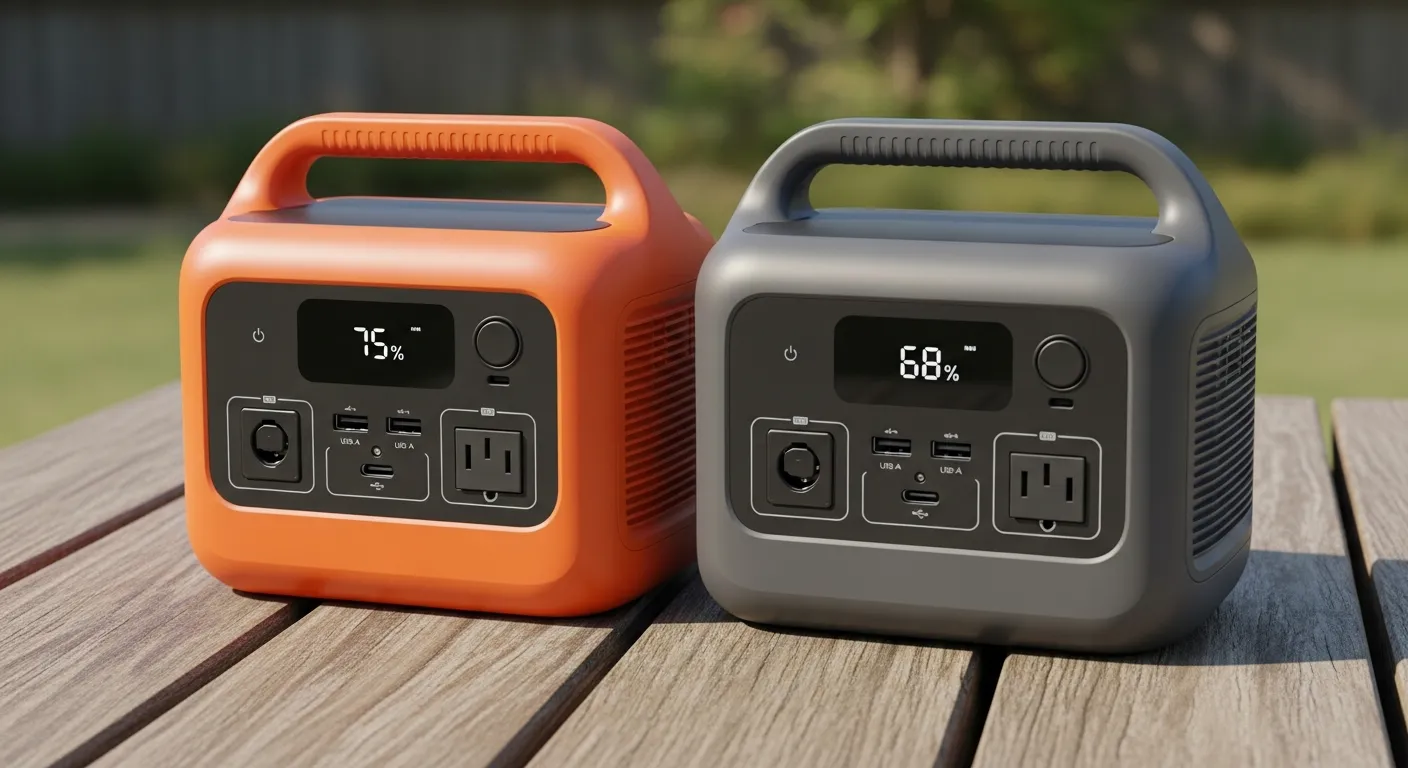
In the portable power station market, two brands dominate the conversation: Jackery vs EcoFlow. Both companies have built loyal followings with reliable, feature-rich products - but they take different approaches to design, technology, and pricing. So which brand is right for you?
In this comprehensive Jackery vs EcoFlow comparison for 2025, we'll break down the key differences across their product lineups, compare their flagship models head-to-head, and help you decide which brand best fits your power needs and budget.
Brand Overview
Jackery
Founded in 2012 in California, Jackery was one of the first brands to popularize portable power stations. They're known for clean, simple designs with distinctive orange accents, reliable performance, and excellent customer support. Jackery's product line ranges from small 300Wh units to large 2,000Wh+ expandable systems.
EcoFlow
Founded in 2017 in Shenzhen, EcoFlow quickly disrupted the market with industry-leading charging speeds and innovative features like the X-Stream fast charging technology. They tend to push boundaries with higher output power, faster recharging, and smart home integration features. Their lineup extends from compact units to massive whole-home backup systems.
Key Differences: Jackery vs EcoFlow
Charging Speed
EcoFlow has a clear edge in charging speed. Their X-Stream technology enables AC charging from 0-80% in under an hour on most models. Jackery has improved significantly with their newer Plus series but generally takes 1.5-2x longer to fully charge via AC.
Battery Technology
Both brands have transitioned to LiFePO4 (LFP) batteries across their current lineups. EcoFlow made the switch with their DELTA 2 series, while Jackery adopted LFP with their Plus and Pro models. Both offer 3,000-5,000 cycle lifespans.
Output Power
EcoFlow generally offers higher output wattage relative to battery capacity. For example, the EcoFlow DELTA 2 Max outputs 2,400W from 2,048Wh, while the comparable Jackery Explorer 2000 Plus outputs 3,000W from 2,042Wh - Jackery actually wins on raw output in this tier.
App & Smart Features
Both brands offer smartphone apps for monitoring and control. EcoFlow's app is more feature-rich with energy management, firmware updates, smart home integration (works with Alexa and Google Home), and detailed usage analytics. Jackery's app covers the basics - monitoring, firmware updates, and basic settings.
Solar Ecosystem
Both brands sell proprietary solar panels optimized for their power stations. Jackery's SolarSaga panels are highly rated for portability and efficiency. EcoFlow's solar panels offer bifacial designs in their newer models for higher output in varied light conditions. Both also accept third-party panels via MC4 or Anderson connectors.
Build Quality & Design
Jackery units tend to be slightly lighter for similar capacities and have a more understated, consumer-friendly design. EcoFlow units feel more industrial with robust build quality and tend to have more output ports. Both brands offer solid construction suitable for outdoor and indoor use.
Head-to-Head: Flagship Model Comparison
| Feature | Jackery Explorer 2000 Plus | EcoFlow DELTA 2 Max |
|---|---|---|
| Capacity | 2,042Wh | 2,048Wh |
| Output Power | 3,000W (6,000W surge) | 2,400W (4,800W surge) |
| Battery Type | LiFePO4 | LiFePO4 |
| Cycle Life | 4,000+ cycles | 3,000+ cycles |
| Weight | 61.5 lbs | 50.7 lbs |
| AC Recharge | 0-100% in 2 hours | 0-80% in 68 min |
| Solar Input | Up to 1,200W | Up to 1,000W |
| Expandable | Up to 12,252Wh (5 batteries) | Up to 6,144Wh (2 batteries) |
| UPS Mode | Yes | Yes (20ms) |
| AC Outlets | 5 | 6 |
| USB Ports | 4 (2x USB-C, 2x USB-A) | 6 (2x USB-C, 4x USB-A) |
| App Control | Yes (basic) | Yes (advanced) |
| Price | ~$1,999 | ~$1,699 |
Mid-Range: Jackery Explorer 1000 Plus vs EcoFlow DELTA 2
| Feature | Jackery Explorer 1000 Plus | EcoFlow DELTA 2 |
|---|---|---|
| Capacity | 1,264Wh | 1,024Wh |
| Output Power | 2,000W (4,000W surge) | 1,800W (2,700W surge) |
| Battery Type | LiFePO4 | LiFePO4 |
| Weight | 32.8 lbs | 27.5 lbs |
| AC Recharge | 0-100% in 1.7 hours | 0-80% in 50 min |
| Expandable | Up to 5,056Wh | Up to 3,072Wh |
| Price | ~$1,299 | ~$999 |
Which Brand Should You Choose?
Choose Jackery If:
- You want maximum expandability (up to 12,252Wh with the 2000 Plus)
- Higher continuous output power matters (3,000W in the 2000 Plus tier)
- You prefer a more established brand with longer track record
- Solar panel quality and portability are priorities
- You value simplicity over feature complexity
Choose EcoFlow If:
- Fast charging speed is a top priority
- You want the most advanced app and smart home integration
- You need a lighter unit (EcoFlow is often lighter at similar capacities)
- Budget is a factor (EcoFlow often prices slightly lower)
- You might want whole-home backup integration (DELTA Pro 3 + Smart Home Panel)
Price Comparison
EcoFlow generally offers better value at most price points, with lower MSRPs and more frequent sales. However, Jackery bundles (power station + solar panels) are often competitively priced and include high-quality panels. Both brands regularly run 20-30% off sales during Prime Day, Black Friday, and holiday events.
| Price Range | Best Jackery | Best EcoFlow |
|---|---|---|
| Under $500 | Explorer 300 Plus (288Wh) | RIVER 2 Max (512Wh) |
| $500-$1,000 | Explorer 600 Plus (632Wh) | DELTA 2 (1,024Wh) |
| $1,000-$2,000 | Explorer 2000 Plus (2,042Wh) | DELTA 2 Max (2,048Wh) |
| $2,000+ | Explorer 3000 Pro (3,024Wh) | DELTA Pro 3 (4,096Wh) |
Warranty & Support
Both brands offer solid warranty coverage:
- Jackery: 5-year warranty on Plus/Pro models, 3-year on standard models. US-based support with good response times.
- EcoFlow: 5-year warranty on most current models. Responsive support with live chat and phone options.
Frequently Asked Questions
Is Jackery or EcoFlow more reliable?
Both brands have strong reliability records. Jackery has a longer track record (founded 2012 vs 2017) and slightly higher customer satisfaction scores, but EcoFlow units are equally well-built. Both use quality LiFePO4 cells in their current lineups.
Can I use Jackery solar panels with EcoFlow, or vice versa?
In most cases, yes - as long as the voltage and connector types are compatible. Both brands use standard MC4 or Anderson connectors on many panels. However, for optimal performance and warranty coverage, it's best to stick with the same brand ecosystem.
Which brand is better for camping?
Both are excellent for camping. Jackery edges ahead slightly with lighter, more portable units and well-designed solar panel bundles. EcoFlow is better if you need to recharge quickly at a campsite with shore power. See our best power stations for camping guide for specific recommendations.
Which brand is better for home backup?
EcoFlow wins for home backup, particularly with the DELTA Pro 3 and Smart Home Panel integration that allows automatic switchover for your entire electrical panel. Jackery's systems work well too but lack the same level of home integration. Check our best power stations for home backup roundup.
Do both brands support solar charging?
Yes. Both Jackery and EcoFlow offer excellent solar charging with proprietary panels and third-party compatibility. Learn more in our solar charging guide.
The Verdict
There's no outright winner in the Jackery vs EcoFlow debate - it depends on your priorities. EcoFlow is the better choice for tech-savvy users who want fast charging, smart features, and potential whole-home integration. Jackery is ideal for those who prioritize expandability, simplicity, and brand heritage. Both make excellent portable power stations that will serve you well for years.