Best Solar Generator for Off-Grid Living in 2026: Top 6 Picks
Best solar generators for off-grid living in 2026. Top 6 portable power stations with high solar input, LFP batteries, and expandable capacity for cabin, van life, and remote living.
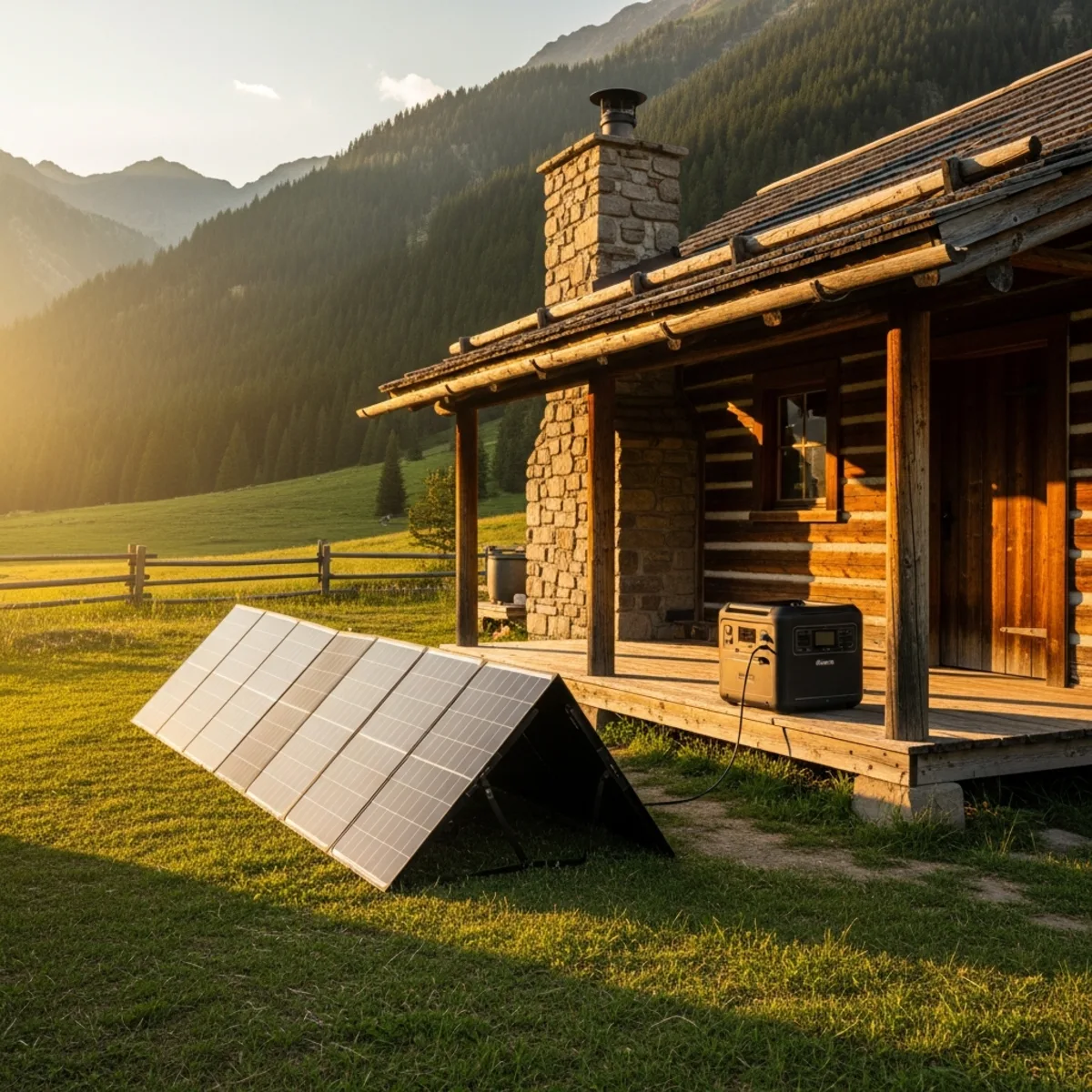
What Makes a Solar Generator "Off-Grid Ready"?
A solar generator is just a portable power station paired with solar panels — no fuel, no fumes, no noise. But not every power station is built for sustained off-grid use. When you're relying on solar as your primary power source, you need:
- High solar input (400W+): More input = faster recharge, especially on cloudy days
- Large capacity (1000Wh+): You need to store enough to get through the night
- LFP battery: 3,000+ cycle life is essential when you're cycling daily
- Expandability: Add batteries as your needs grow
- MPPT charge controller: Maximizes solar panel efficiency (all quality units have this)
- Passthrough charging: Use power while charging from solar simultaneously
Our Top 6 Picks
1. Bluetti AC200L — Best Overall for Off-Grid
| Spec | Detail |
|---|---|
| Capacity | 2048Wh (expandable to 8192Wh) |
| AC Output | 2400W (3600W surge) |
| Solar Input | 1200W MPPT |
| Battery | LiFePO4, 3,500+ cycles |
| Weight | 62.4 lbs |
The AC200L takes the top spot thanks to its class-leading 1200W solar input. With 1000W of panels in good sun, you can fully recharge in about 2.5 hours — enough to cycle the battery daily and still have surplus. Expandable to 8192Wh with B300K batteries for multi-day autonomy.
Read our full Bluetti AC200L review for detailed testing.
2. EcoFlow DELTA 2 Max — Best Smart Features
| Spec | Detail |
|---|---|
| Capacity | 2048Wh (expandable to 6144Wh) |
| AC Output | 2400W (4800W surge) |
| Solar Input | 1000W MPPT |
| Battery | LiFePO4, 3,000+ cycles |
| Weight | 50.6 lbs |
EcoFlow's app ecosystem is the best in the business — schedule charging times, monitor solar production remotely via Wi-Fi, and optimize battery longevity settings. The 1000W solar input is excellent, and the 4800W surge handles heavy startup loads. Lighter than the AC200L at 50.6 lbs.
See our EcoFlow DELTA 2 Max review for full details.
3. Bluetti AC500 + B300S — Best for Whole-Home Off-Grid
| Spec | Detail |
|---|---|
| Capacity | 3072-18,432Wh (modular) |
| AC Output | 5000W (10,000W surge) |
| Solar Input | 3000W MPPT |
| Battery | LiFePO4, 3,500+ cycles |
| Weight | Modular (base 29.8 lbs + batteries) |
If you're building a serious off-grid system, the AC500 is essentially a modular home battery. Pair it with up to 6 B300S expansion batteries for 18,432Wh — enough to power a small home for 2-3 days without sun. The 3000W solar input means massive panel arrays are possible, and 5000W output runs virtually anything including well pumps and power tools.
4. Jackery Explorer 2000 Plus — Best Portable Off-Grid Kit
| Spec | Detail |
|---|---|
| Capacity | 2042Wh (expandable to 12,264Wh) |
| AC Output | 3000W (6000W surge) |
| Solar Input | 1400W MPPT |
| Battery | LiFePO4, 4,000+ cycles |
| Weight | 61.5 lbs |
Jackery's 2000 Plus brings the highest cycle life in our roundup at 4,000+ cycles — that's 11+ years of daily use. The 1400W solar input is the fastest recharge option, and Jackery's matching SolarSaga panels are designed to connect without adapters. The rolling cart accessory makes this genuinely portable despite its weight.
5. EcoFlow RIVER 2 Pro — Best Compact Solar Generator
| Spec | Detail |
|---|---|
| Capacity | 768Wh |
| AC Output | 800W (1600W surge) |
| Solar Input | 220W MPPT |
| Battery | LiFePO4, 3,000+ cycles |
| Weight | 17.2 lbs |
Not everyone needs a massive system. The RIVER 2 Pro paired with a single 220W panel gives you a compact, grab-and-go solar generator that weighs under 30 lbs total. Perfect for weekend off-grid trips, van life with minimal power needs, or as a supplementary unit alongside a larger system.
Read our EcoFlow RIVER 2 Pro review for testing results.
6. Anker SOLIX F2000 — Best Value High-Capacity
| Spec | Detail |
|---|---|
| Capacity | 2048Wh (expandable to 4096Wh) |
| AC Output | 2400W (4800W surge) |
| Solar Input | 1000W MPPT |
| Battery | LiFePO4, 3,000+ cycles |
| Weight | 56.5 lbs |
Anker consistently undercuts the competition on price while delivering competitive specs. The F2000 matches the DELTA 2 Max on output and solar input at a lower price point. The 4800W surge capacity and 1000W solar input make it a solid off-grid contender. The main trade-off is expansion — capped at 4096Wh vs higher ceilings from Bluetti and Jackery.
Solar Panel Sizing for Off-Grid
Your power station is only as good as the solar panels feeding it. Here's a quick sizing guide:
| Daily Usage | Recommended Panels | Expected Recharge |
|---|---|---|
| Light (500Wh/day) | 200W panel | 3-4 hours full sun |
| Moderate (1000Wh/day) | 400W panels | 3-4 hours full sun |
| Heavy (2000Wh/day) | 800-1000W panels | 3-4 hours full sun |
| Whole home (3000Wh+/day) | 1500-2000W panels | 3-4 hours full sun |
Rule of thumb: Size your panels to fully recharge your battery in 4-5 hours of peak sun. This accounts for cloudy days and seasonal variation. In northern latitudes or winter, add 30-50% more panel capacity.
For detailed solar charging guidance, see our solar charging guide.
Off-Grid Tips
- Track your daily consumption for a week before sizing your system — most people overestimate their needs
- Buy more panel capacity than you think you need — cloudy days and winter sun are real
- Use DC devices when possible (12V fridge, USB lights) — skipping the inverter saves 10-15% energy
- Angle your panels toward the sun and adjust throughout the day for 20-30% more production
- Keep batteries above 20% — deep discharges shorten lifespan. Read our battery lifespan guide for more
- Have a backup charging method — car charger or small gas generator for extended cloudy periods
Our Recommendation
For most off-grid setups, the Bluetti AC200L paired with 800-1000W of panels is the sweet spot — massive solar input, great expandability, and the longest warranty in its class. If you need whole-home power, step up to the AC500 system. For portable weekender setups, the EcoFlow RIVER 2 Pro with a single 220W panel keeps things light and simple.
Whatever you choose, LFP batteries and high solar input are non-negotiable for off-grid use. Your power station will be cycling daily — make sure it's built to handle it.
Frequently Asked Questions
How much solar power do I need to live off-grid?
The average off-grid household needs 3,000–5,000Wh of daily power generation. This covers a refrigerator, lights, laptop, phone charging, water pump, and occasional cooking appliances. You'll want enough solar panels to generate 1.5x your daily usage to account for cloudy days and seasonal variation.
Can a solar generator power an entire house?
A single solar generator typically can't power a full conventional house, but it can absolutely power a small off-grid cabin or tiny home. Units like the EcoFlow DELTA Pro with expansion batteries (up to 10.8kWh) can run essential circuits including a fridge, lights, and electronics. For a full-size home, you'd need multiple units or a dedicated solar installation.
How long do solar generators last?
Modern solar generators with LiFePO4 (lithium iron phosphate) batteries last 3,000–3,500 charge cycles before dropping to 80% capacity. With daily use, that's roughly 8–10 years of reliable service. The solar panels themselves typically last 25+ years with minimal degradation.
What's the difference between a solar generator and a regular generator?
A solar generator combines a battery, inverter, and charge controller in one unit and recharges from solar panels — producing zero emissions and zero noise. A gas generator burns fuel to produce electricity on demand with no battery storage. Solar generators are better for consistent moderate loads, while gas generators handle heavy peak demands like well pumps or power tools.
Do solar generators work in cloudy weather?
Yes, but at reduced efficiency. Solar panels still generate 10–25% of their rated output on overcast days. This means a 400W panel might produce only 40–100W in heavy cloud cover. For off-grid reliability, size your battery storage to carry you through 2–3 cloudy days and consider supplemental charging via wall outlet or car when available.
What appliances can I run on a solar generator?
With a 2,000W+ solar generator, you can run most household appliances including refrigerators, microwaves, coffee makers, blenders, TVs, fans, and power tools. The main exceptions are high-draw heating elements like space heaters (1,500W), hair dryers, and electric ovens, which drain batteries extremely fast and are better served by propane alternatives off-grid.