Best Portable Power Station for Power Outages (2025)
Find the best portable power station for power outages in 2025. We compare top-rated units from EcoFlow, Bluetti, Jackery and Anker for emergency backup power.
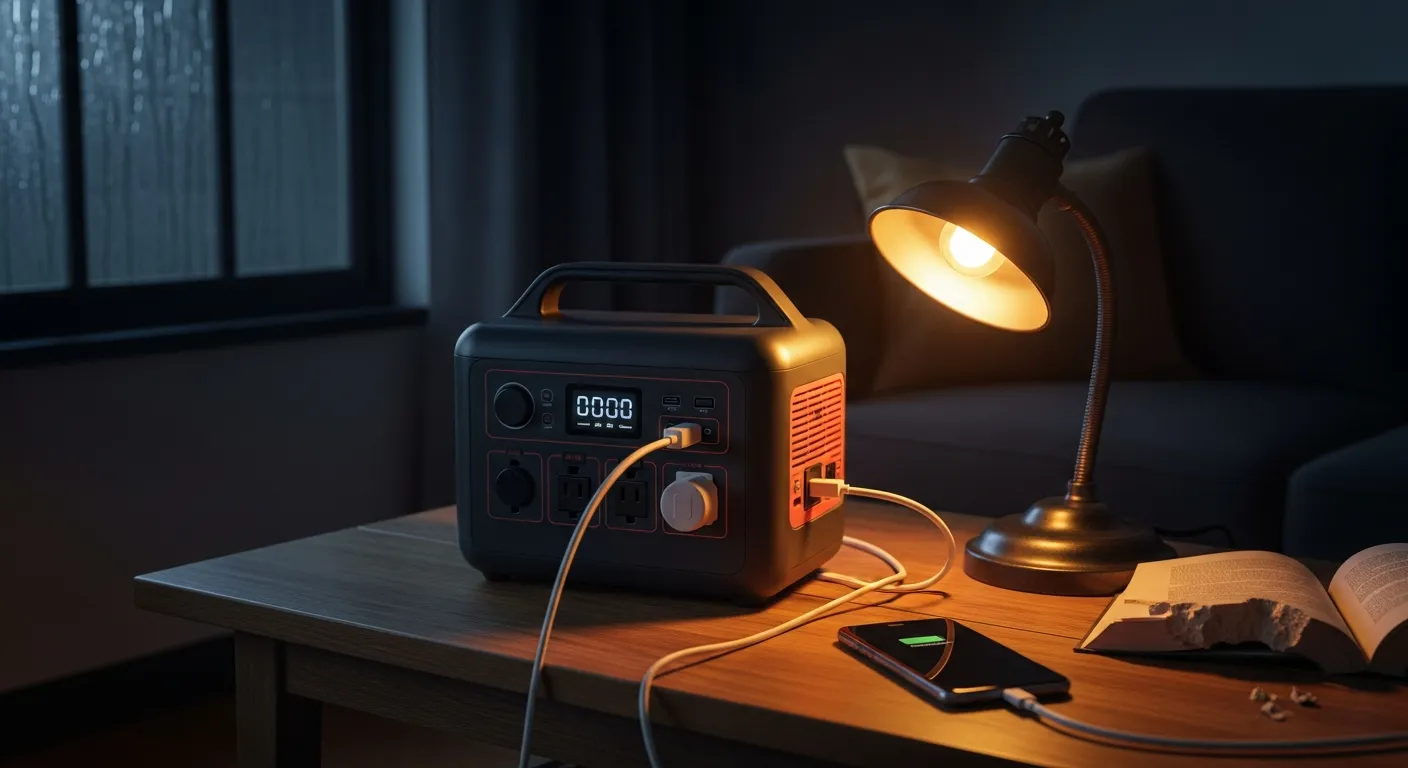
Finding the best portable power station for power outages can mean the difference between comfort and chaos when the grid goes down. Whether you're dealing with rolling blackouts, severe storms, or an aging electrical grid, a reliable portable power station keeps your essentials running - lights, phones, refrigerators, Wi-Fi routers, and even medical devices like CPAP machines.
In this guide, we've tested and compared the top portable power stations specifically for emergency power outage preparedness in 2025. We evaluated battery capacity, output power, recharge speed, and overall value to help you find the perfect backup power solution.
What to Look for in a Power Station for Outages
Power outages demand different features than camping or tailgating. Here's what matters most:
- Battery Capacity (Wh): You need enough watt-hours to run essentials for 8-24+ hours. For most households, 1,000-2,000Wh is the sweet spot.
- Output Power (W): Your power station must handle your highest-draw appliance. Refrigerators need 100-400W running but can surge to 1,200W on startup.
- Recharge Speed: Fast AC or solar recharging means less downtime between outages or during extended events.
- Battery Type: LiFePO4 (LFP) batteries last 3,000-5,000 cycles and are safer, making them ideal for home backup duty.
- UPS Function: Some units offer uninterruptible power supply (UPS) mode with <20ms switchover - critical for computers and networking equipment.
- Expandability: Extra battery packs let you scale capacity without buying a whole new unit.
Top 6 Portable Power Stations for Power Outages
1. EcoFlow DELTA Pro 3 - Best Overall
The EcoFlow DELTA Pro 3 is the gold standard for home power outage preparedness. With 4,096Wh of LFP battery capacity and 4,000W output (8,000W surge), it can run virtually any household appliance including air conditioners, well pumps, and electric heaters.
- Capacity: 4,096Wh (expandable to 12,288Wh)
- Output: 4,000W (8,000W surge)
- Battery: LiFePO4, 4,000+ cycles
- Weight: 114 lbs
- Recharge: 0-100% in 2.7 hours (AC)
- UPS: Yes, 10ms switchover
- Price: ~$3,699
The DELTA Pro 3 also integrates with EcoFlow's home panel for seamless whole-home backup, and supports up to 1,600W solar input.
2. Bluetti AC200L - Best Value for Mid-Range
The Bluetti AC200L delivers 2,048Wh of LFP power with 2,400W output at a competitive price point. It's a top pick for households that need to keep a fridge, lights, and communications running for 12-24 hours.
- Capacity: 2,048Wh (expandable to 8,192Wh)
- Output: 2,400W (3,600W surge)
- Battery: LiFePO4, 3,500+ cycles
- Weight: 62.4 lbs
- Recharge: 0-80% in 45 min (AC)
- UPS: Yes, 20ms switchover
- Price: ~$1,399
3. Jackery Explorer 2000 Plus - Best Expandable System
Jackery's Explorer 2000 Plus offers a modular approach to power outage preparedness. Start with 2,042Wh and add up to five expansion batteries for a massive 12,252Wh total - enough to power a home for days.
- Capacity: 2,042Wh (expandable to 12,252Wh)
- Output: 3,000W (6,000W surge)
- Battery: LiFePO4, 4,000+ cycles
- Weight: 61.5 lbs
- Recharge: 0-100% in 2 hours (AC)
- UPS: Yes
- Price: ~$1,999
4. Anker SOLIX F2000 (PowerHouse 767) - Best Smart Features
The Anker SOLIX F2000 packs 2,048Wh with intelligent load management via its app. The built-in RV port and HID feature (which boosts output to handle 240V appliances through smart voltage management) make it especially versatile.
- Capacity: 2,048Wh (expandable to 4,096Wh)
- Output: 2,400W (4,800W surge)
- Battery: LiFePO4, 3,000+ cycles
- Weight: 66.1 lbs
- Recharge: 0-80% in 1 hour (AC)
- UPS: Yes
- Price: ~$1,499
5. EcoFlow DELTA 2 Max - Best Mid-Size Option
If you don't need the massive capacity of the DELTA Pro 3, the DELTA 2 Max offers a compelling balance of power and portability with 2,048Wh and 2,400W output.
- Capacity: 2,048Wh (expandable to 6,144Wh)
- Output: 2,400W (4,800W surge)
- Battery: LiFePO4, 3,000+ cycles
- Weight: 50.7 lbs
- Recharge: 0-80% in 68 min (AC)
- UPS: Yes, 20ms switchover
- Price: ~$1,699
6. Bluetti AC70 - Best Budget Option
For shorter outages or lighter power needs, the Bluetti AC70 offers 768Wh and 1,000W output at an affordable price. Great for keeping phones charged, lights on, and a router running for 8-12 hours.
- Capacity: 768Wh
- Output: 1,000W (2,000W surge)
- Battery: LiFePO4, 3,000+ cycles
- Weight: 22.5 lbs
- Recharge: 0-80% in 45 min (AC)
- UPS: No
- Price: ~$499
Comparison Table
| Power Station | Capacity | Output | Battery Type | Weight | UPS | Price |
|---|---|---|---|---|---|---|
| EcoFlow DELTA Pro 3 | 4,096Wh | 4,000W | LiFePO4 | 114 lbs | Yes | $3,699 |
| Bluetti AC200L | 2,048Wh | 2,400W | LiFePO4 | 62.4 lbs | Yes | $1,399 |
| Jackery Explorer 2000 Plus | 2,042Wh | 3,000W | LiFePO4 | 61.5 lbs | Yes | $1,999 |
| Anker SOLIX F2000 | 2,048Wh | 2,400W | LiFePO4 | 66.1 lbs | Yes | $1,499 |
| EcoFlow DELTA 2 Max | 2,048Wh | 2,400W | LiFePO4 | 50.7 lbs | Yes | $1,699 |
| Bluetti AC70 | 768Wh | 1,000W | LiFePO4 | 22.5 lbs | No | $499 |
How Long Will a Power Station Last During an Outage?
Runtime depends on your power consumption. Here are estimates for common scenarios:
| Scenario | Power Draw | 768Wh Runtime | 2,048Wh Runtime | 4,096Wh Runtime |
|---|---|---|---|---|
| Lights + Phone + Router | ~50W | ~13 hours | ~36 hours | ~72 hours |
| Above + Refrigerator | ~150W avg | ~4.5 hours | ~12 hours | ~24 hours |
| Above + CPAP + TV | ~250W avg | ~2.7 hours | ~7 hours | ~14 hours |
| Full essentials + space heater | ~800W avg | ~50 min | ~2.3 hours | ~4.5 hours |
For extended outages, pair your power station with solar panels to recharge during the day and maintain continuous power.
Tips for Power Outage Preparedness
- Keep it charged: Maintain your power station at 80% charge at all times. LFP batteries handle long-term storage well at this level.
- Know your loads: Use our power needs calculator guide to figure out exactly how much capacity you need.
- Prioritize essentials: During extended outages, focus on refrigerator, medical devices, phones, and lighting.
- Add solar: A 200-400W solar panel setup provides significant daily recharge even in cloudy conditions.
- Test regularly: Run a practice outage every few months to make sure everything works as expected.
Frequently Asked Questions
Can a portable power station run a whole house during a power outage?
Not typically. Even the largest portable units (4,000Wh+) are designed to run essential circuits - refrigerator, lights, communications, and medical devices. For whole-home backup, you'd need a standby generator or a large expandable system like the EcoFlow DELTA Pro 3 with extra batteries and a home integration panel.
How is a portable power station different from a gas generator for outages?
Portable power stations are silent, produce zero emissions (safe for indoor use), require no fuel storage, and need minimal maintenance. Gas generators offer more sustained power but are noisy, require ventilation, and need fuel. For more details, check our power station vs gas generator comparison.
Should I get a UPS function for power outages?
Yes, if you need to protect computers, networking equipment, or medical devices. UPS mode switches to battery power in under 20ms - fast enough that sensitive electronics never notice the interruption.
How often should I charge my power station if I'm just keeping it for emergencies?
LiFePO4 power stations can hold their charge for months. Check the charge level every 2-3 months and top off to 80% if it has dropped. Avoid storing at 100% for extended periods.
Can I use solar panels to recharge during a multi-day outage?
Absolutely. Most power stations on this list accept 400-1,600W of solar input, which can fully recharge the unit in 3-6 hours of direct sunlight. This makes solar + power station an excellent off-grid backup strategy.